Sizing
What Size Dumpster Do I Need? A Jacksonville Guide
The 20 yard is our most popular all-purpose size. How to pick between 10, 15, 20, 30 and 40 yards by volume, weight and space in Jacksonville.
Read the guideGuide · 9 min read
If you have never rented a dumpster, this is the page to read first. It covers the whole process from the phone call to the pickup, with the Jacksonville, Duval County and Florida specifics that national guides leave out.
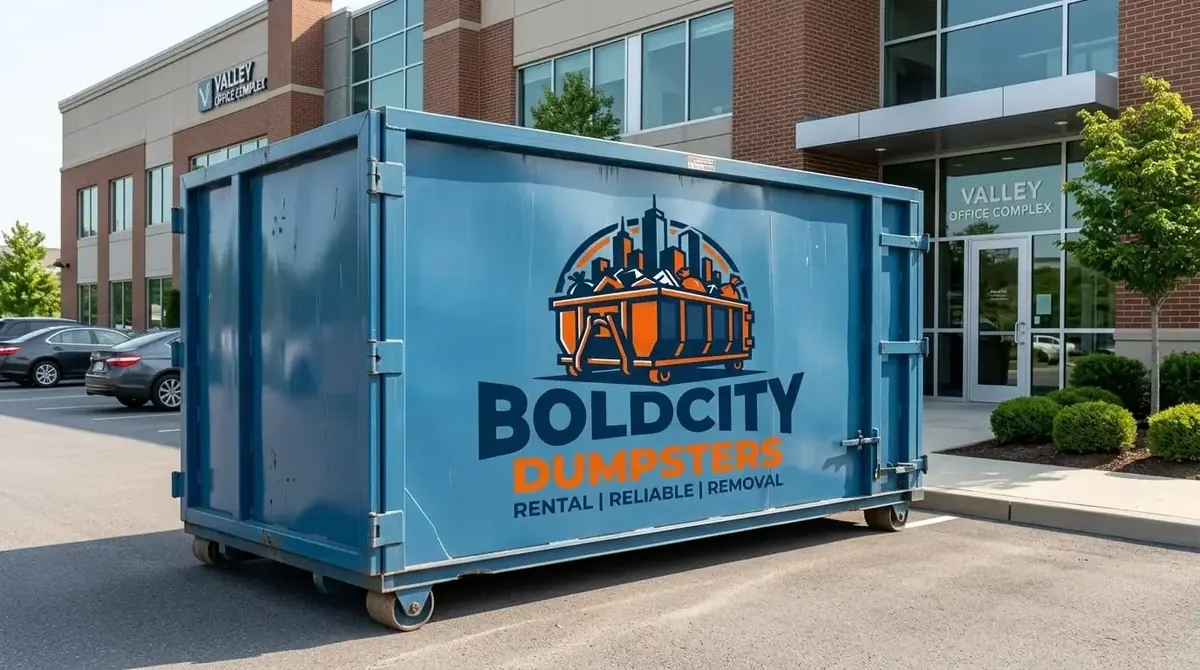
Whether you are renovating a home, clearing out a garage, running a construction job or cleaning up after a storm, a roll-off puts all the debris in one place instead of trip after trip to the landfill. The payoff is a cleaner, safer property, fewer landfill runs and one flat-rate cleanup instead of a pile of small bills. Remodels in particular make more debris than people expect — drywall, cabinets, flooring and fixtures do not fit in a curbside cart — and roof tear-offs, estate cleanouts, landscaping and demolition all fill a box quicker than a trailer.
You call, tell us about the job and the address, and pick a size with our help. You get a flat-rate quote with delivery, pickup and disposal typically included, for a standard rental period — most standard rentals include 7 days. We schedule delivery to your home, business or job site — same-day or next-day in many Jacksonville service areas, depending on availability. You fill it at your own pace with approved debris, keeping it level with the top rim, and when you are finished we return for prompt pickup and disposal. You do not need to be home for delivery or pickup, as long as we have clear placement instructions and the drop-off area is accessible and clear of vehicles and equipment.
Our yard is at 678 Edgewood Ave N, on the west side of Jacksonville and inside the City. Jacksonville is consolidated with Duval County, so City rules cover the county — except Jacksonville Beach, Atlantic Beach, Neptune Beach and the Town of Baldwin, which keep their own codes for streets and garbage.
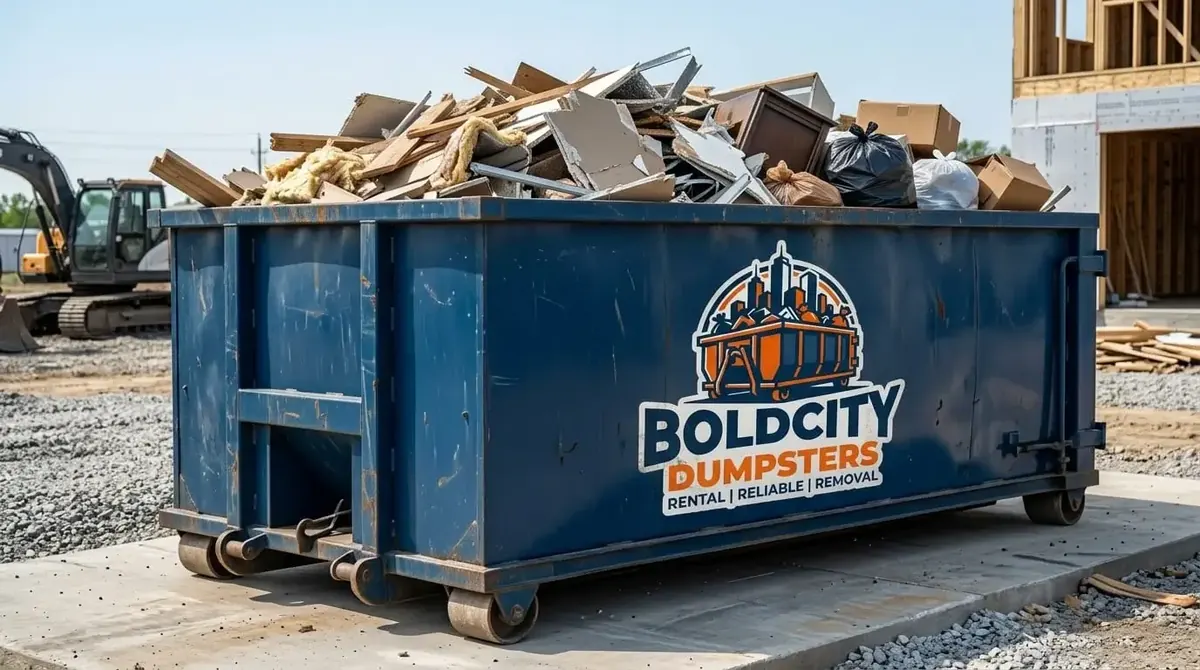
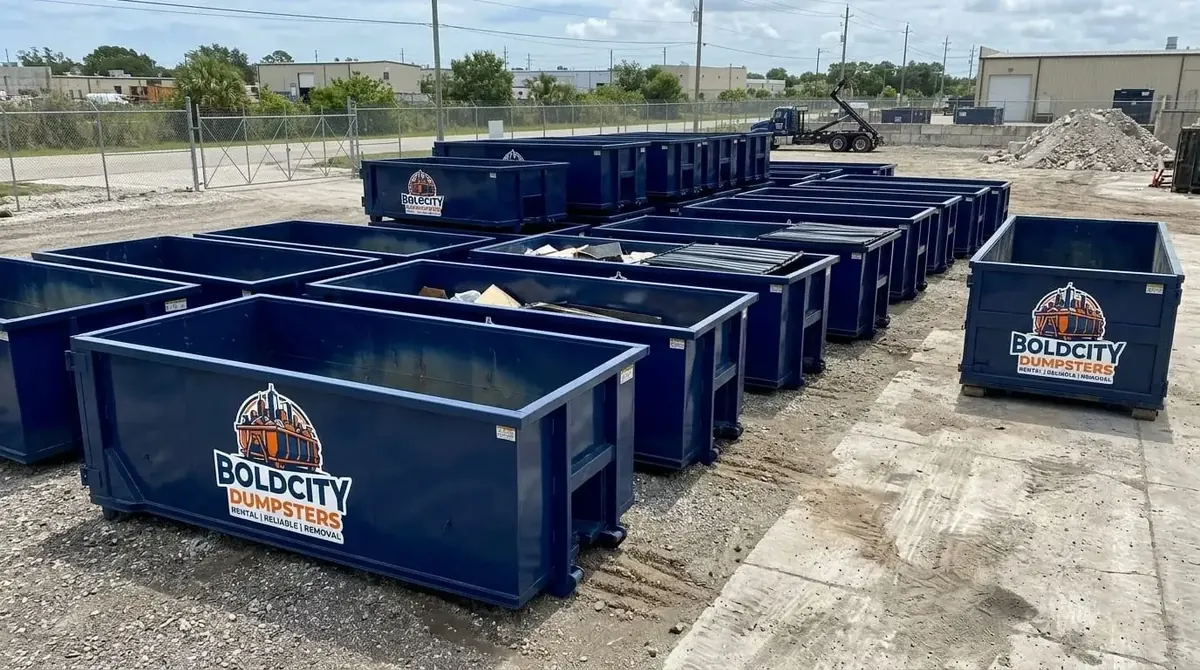
Start with the job, then check the weight. A 10 yard, about 14 feet long, suits small remodels, roofing debris and heavy material such as concrete and dirt. A 15, about 16 feet, suits garage cleanouts, yard waste and flooring removal. The 20, 30 and 40 share a footprint of about 22 feet and get taller: the 20 for home remodeling, roofing and larger cleanouts — our most popular size; the 30 for estate cleanouts, renovations and demolition debris; the 40 for commercial construction, major cleanups and large demolition. All are about 7.5 feet wide. Many rentals include about 1–2 tons on a 10 up to about 5–6 tons on a 40, depending on the debris. The sizing guide has the full table.
The City of Jacksonville's curbside service is built for household garbage. Building materials from your own project are limited to 1 cubic yard weekly in non-automated areas and 2 cubic yards every other week in automated areas (Ordinance Code §380.207). The City's FAQ says anything more needs "a rubbish removal company to provide a construction debris container," and "Any debris from work performed by a contractor must be removed by the contractor." Tree waste from a tree surgeon or similar commercial entity is not the City's job either (§380.206).
Some items need their own appointment. The City picks up up to four standard vehicle tires at the curb by appointment through 630-CITY (2489), and major appliances separately, because "Major appliances are prohibited by law in landfills and therefore are collected separately from household garbage." Paint, chemicals, fuels, batteries and electronics go to the free Household Hazardous Waste Facility at 2675 Commonwealth Avenue. And the City "does not provide commercial dumpster service" at all. That is why a roll-off is the normal answer for a remodel, a roof, a move-out or a construction site in Jacksonville.
On your own driveway we found no City permit, setback or time-limit rule for a roll-off. On a City street, sidewalk or right-of-way, Ordinance Code §744.110 requires a right-of-way permit from the Director of Public Works: $127 residential or $191 commercial, doubled if work starts first, applied for through JaxEPICS, with a $50,000 surety bond on file for non-driveway work and an approved Maintenance of Traffic plan where traffic is affected. Without one, the fine can be up to $250, each day a separate offense, and the Sheriff may remove the obstruction (§746.102). On a state road — Edgewood Avenue North in front of our own yard is State Road 111 — there is no FDOT permit path for a roll-off (Rules 14-20.008 and 14-20.010). The container needs a flat, stable surface, and protective boards can often be used on request. The permit guide covers the Beaches, Baldwin and the counties too.
Ordinance Code §380.604(a) says no one may use the City's streets to collect, transport or provide container service for nonresidential solid waste in Duval County "without a valid and existing franchise," and §380.604(b)(5) exempts "exempt waste" — which §380.603 defines to include recovered materials and construction and demolition debris. Residential waste is outside the rule. The City's FAQ: "For waste other than construction and demolition debris and recycled materials, the company must have a franchise issued by the city."
So our commercial work in Jacksonville is construction, renovation, fit-out and demolition debris at businesses and property turnovers — not ongoing or scheduled commercial trash service. The Beaches and Baldwin sit outside the City's franchise system (§380.604(c)) and set their own rules, covered in the permit guide.
In Florida the federal asbestos rules (NESHAP) are run by FDEP, and Duval County/City of Jacksonville is a local program: notices go to the City's Environmental Quality Division, Air Quality Branch, 214 N. Hogan St., 5th Floor, 904-255-7100. FDEP says a Notice of Renovation or Demolition must be submitted "at least 10 working days before the start date" for projects that remove asbestos-containing material over the NESHAP thresholds — 260 linear feet on pipes, 160 square feet on other components, or 35 cubic feet — and that every demolition of a building the rule covers needs a notice "even when no asbestos is present." Since 23 March 2025 the fee is a flat $200, or $100 when filed and paid online.
Most homes are outside it: FDEP's exemption covers a building with four or fewer residential dwelling units that is not part of a larger multi-building project, has not been used commercially, and is not being demolished to make room for a commercial structure. Either way, Rule 62-701.730(19) says regulated asbestos "shall not be disposed of in a construction and demolition debris disposal unit," so asbestos never goes in our roll-offs. The what-goes-in guide has the detail.
Hurricane season brings its own rules. The City's JaxReady guidance says to separate storm debris into four piles — white goods and appliances; construction and demolition/bulky waste such as building materials, carpet, drywall, fencing, furniture, lumber, mattresses and plumbing; vegetative debris; and routine household waste — because "Failure to keep debris separated by type may prevent workers from collecting it." Put it at the curb without blocking the road or storm drains, at least three feet from obstacles, and never burn it: "Burning storm debris is a violation of Jacksonville's year-round burn ban."
For containers, Ordinance Code §320.102(c) says that during a hurricane warning, loose objects in exposed outdoor locations must be lashed down or stored in buildings; we found no Jacksonville rule that requires a roll-off to be removed before a storm. Atlantic Beach is different: City Code §16-8(f) requires all roll-offs and construction dumpsters to be emptied or removed when a tropical storm or hurricane warning covers any part of Duval County. If a storm is coming and a box is on your property, call (904) 595-8110.
Ordinance Code §380.302 says solid waste goes "only in sites designated by the Director," and §386.201(c) requires every construction and demolition debris disposal site in Duval County to hold a certificate of public convenience and necessity. The City's landfill is Trail Ridge, 5110 U.S. Hwy 301 S in Baldwin, open Monday to Friday 6 a.m. to 7 p.m. and Saturday 6 a.m. to 1 p.m. Anyone delivering construction debris is asked to attest whether it was generated inside the City (§380.405). Outside Duval, Clay County sends business waste to its Rosemary Hill facility in Green Cove Springs, St. Johns County sends construction debris to the St. Marks C&D facility or the Waste Pro station in Elkton, and Nassau County's own center refuses it and points to the private Sandhill Recycle Center in Yulee.
Every load must be covered: F.S. 316.520(2) requires a close-fitting tarpaulin or other appropriate cover. Florida also requires each county to run a program for recycling construction and demolition debris (F.S. 403.706(2)(b)), and whenever possible we sort metal, concrete, yard waste, wood and cardboard through local recycling and disposal facilities.
Jacksonville had 949,611 people at the 2020 Census and an estimated 1,017,689 in 2025; Duval County grew from 995,567 to an estimated 1,062,963. The rules change once you leave the City. Jacksonville Beach, Atlantic Beach, Neptune Beach and Baldwin each have their own right-of-way rules, and Atlantic Beach and Jacksonville Beach run exclusive garbage franchises. In Clay County, Fleming Island and Middleburg follow county rules, Green Cove Springs licenses roll-off haulers itself and Orange Park runs an exclusive franchise. Ponte Vedra, Nocatee, Fruit Cove and St. Johns are all unincorporated St. Johns County. In Nassau County, Yulee and unincorporated Amelia Island follow county rules, while Fernandina Beach and Callahan have their own. Each place has its own page — see the service area.
In: furniture and household junk, mattresses, wood and lumber, drywall and flooring, cabinets and countertops, carpet, roofing shingles and underlayment, cardboard and packaging, yard debris and branches, and concrete, dirt and brick in a weight-limited 10 or 15. Out, by Florida law: lead-acid batteries, used oil, white goods such as fridges, freezers, A/C units and water heaters, and whole tires (F.S. 403.708(12) and 403.717(3)). Out of our boxes as well: paints and solvents, flammable liquids, fuel, hazardous chemicals, propane tanks and gas cylinders, medical waste and asbestos-containing materials. The full guide says where each goes instead.
Spread the weight evenly rather than loading everything on one end or one side, break long boards and bulky pieces down, and keep everything level with the top rim — an overfilled dumpster cannot legally or safely be transported. Keep the path clear for pickup. Need more time? Contact us before the scheduled pickup date and we can often extend for an additional daily or weekly fee, or swap a full box for an empty one.
To book, call (904) 595-8110, 24 hours a day, 7 days a week. Have the address, the material and a rough quantity ready, and call earlier in the day for the best chance of same-day delivery. We accept most major credit and debit cards, and payment is generally collected when the booking is confirmed.
Talk to a real person
Call (904) 595-8110 with the address and what is going in. A flat price and a delivery window before you hang up.
Open 24 hours, 7 days
From this guide
Most standard rentals include 7 days. If you need more time, contact us before the scheduled pickup and we can often extend for an additional daily or weekly fee. Finish early and we schedule an earlier pickup.
Only a little from your own project — up to 1 cubic yard weekly in non-automated areas or 2 cubic yards every other week in automated areas (§380.207). Debris from work done by a contractor must be removed by the contractor.
No. As long as we have clear placement instructions and the drop-off area is accessible and free of vehicles and equipment, you do not need to be there for delivery or pickup.
We cover Jacksonville, the Beaches and Baldwin, and communities across Clay, St. Johns and Nassau counties, with each place's rules on its own page. In Fernandina Beach, Orange Park, Atlantic Beach and Jacksonville Beach, we check the City's or Town's rules before booking.
Keep reading
The rest of the series, same approach — official sources, no filler.
Sizing
The 20 yard is our most popular all-purpose size. How to pick between 10, 15, 20, 30 and 40 yards by volume, weight and space in Jacksonville.
Read the guidePermits
No City rule found for a driveway roll-off; a Jacksonville right-of-way permit for City streets; no FDOT path on state roads. Place by place.
Read the guideCost
In many cases, Jacksonville dumpster rentals run about $350 to $750. What is inside that number, what moves it, and the published landfill and permit fees.
Read the guide