Sizing
What Size Dumpster Do I Need? A Jacksonville Guide
The 20 yard is our most popular all-purpose size. How to pick between 10, 15, 20, 30 and 40 yards by volume, weight and space in Jacksonville.
Read the guideGuidelines · 8 min read
Most of what comes out of a house or a job site can go in a roll-off. The exceptions are the things Florida bans from landfills or that construction debris facilities must turn away — and each of them has somewhere to go instead.
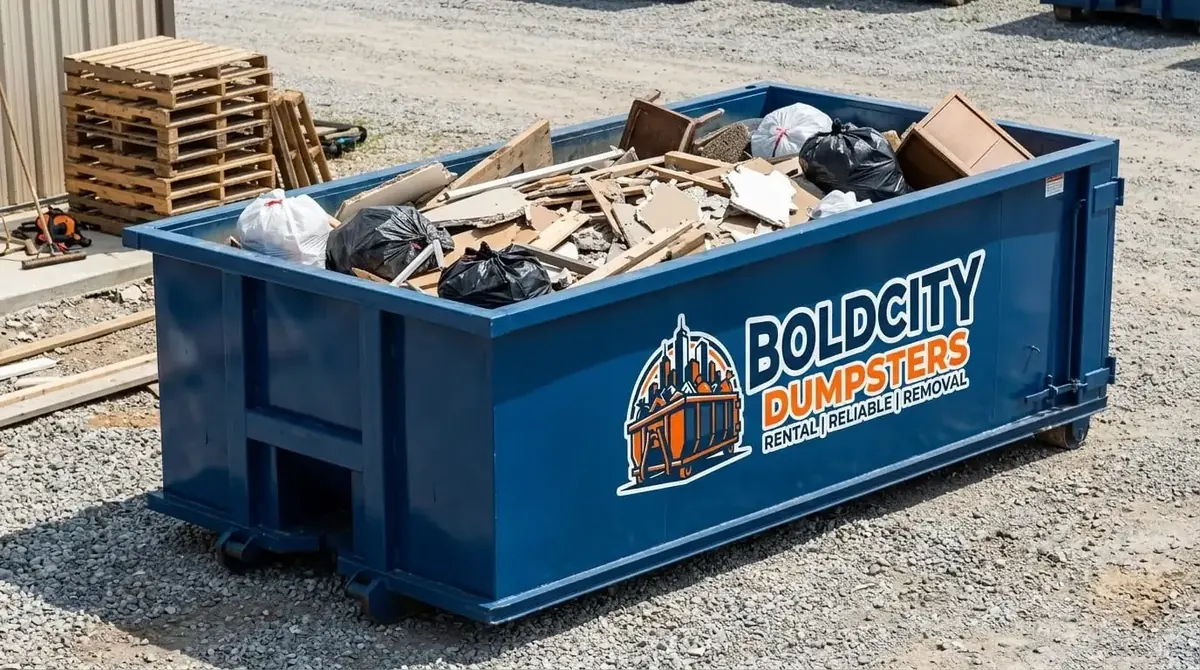
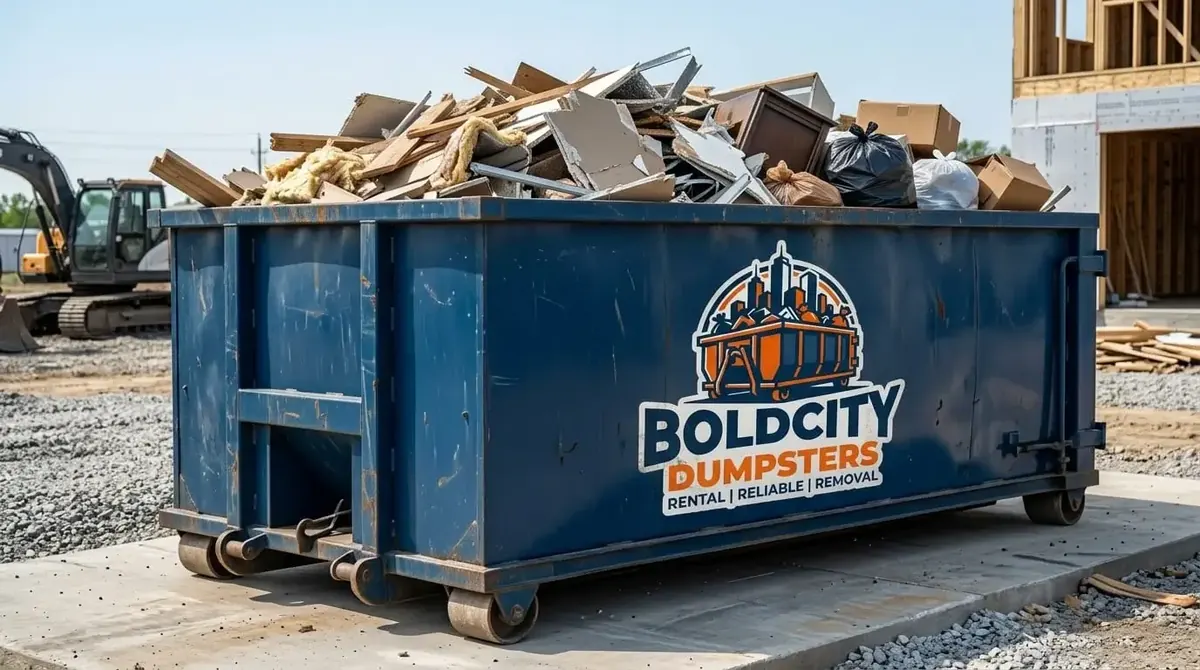
That list lines up with Florida's own definitions. F.S. 403.703(6) defines construction and demolition debris to include "steel, glass, brick, concrete, asphalt roofing material, pipe, gypsum wallboard, and lumber" from building, renovating or tearing down, plus rocks, soils, trees and other vegetative matter from land clearing for a construction project, and clean cardboard, paper, plastic, wood and metal scraps from the job. Construction debris facilities may accept carpet remnants from a construction or demolition project (Rule 62-701.730(7)(h)) and plastic buckets holding hardened paint, tar or cement (Rule 62-701.730(7)(g)). Florida's Class III waste includes yard trash, carpet, cardboard and "furniture other than appliances" (Rule 62-701.200(14)); we found no Florida statute or rule that names mattresses.
Most of the no list comes from F.S. 403.708(12), which says a person "who knows or should know of the nature of the following types of solid waste may not dispose of such solid waste in landfills," and the rules that go with it:
| Item | The rule | Where it goes in Jacksonville |
|---|---|---|
| Lead-acid batteries (car and truck) | F.S. 403.708(12)(a): not in landfills or waste-to-energy plants; battery retailers must take used ones as trade-ins | The store where you buy the new one, or the City HHW Facility |
| Used oil | F.S. 403.708(12)(b) and 403.751(1)(c): not in landfills or mixed with waste bound for them | The HHW Facility, along with used oil filters and antifreeze |
| White goods (large appliances) | F.S. 403.708(12)(d); Rule 62-701.300(8)(a)4: "White goods in any landfill" | City curbside by appointment, the HHW Facility, or Trail Ridge at $20 each, declared at the scale house |
| Whole tires | F.S. 403.717(3)(c); Rule 62-701.300(8)(b): not in any landfill or construction debris facility | Up to four standard tires by curbside appointment through 630-CITY, or Trail Ridge |
| Rechargeable batteries | F.S. 403.7192(3): not in a mixed solid waste stream | The HHW Facility |
| Yard trash | F.S. 403.708(12)(c): not in lined Class I landfills, with a gas-collection exception | Its own load — the ban does not reach Class III or construction debris disposal |
| Hazardous waste | Rule 62-701.300(4): only at a facility permitted for it | The HHW Facility, for household quantities |
Mercury-containing devices may not go to a landfill either (F.S. 403.7186(2)). Two common myths: Florida has no specific law banning electronics from landfills — FDEP says so — but FDEP "strongly recommends recycling all unwanted electronic products"; and the fluorescent lamp rule is aimed at businesses that throw out more than 10 spent lamps a month, not at households (F.S. 403.7186). The City's HHW Facility takes both, free for Duval residents.
Most renovation and demolition loads go to a construction and demolition debris facility, and Rule 62-701.730(4)(a) says "No solid waste other than construction and demolition debris shall be disposed of" there; spotters on the working face pull anything unauthorized out of the waste stream (Rule 62-701.730(7)(d)). On top of that: no noncontainerized liquids in construction debris or household-waste units, and containers or tanks of 20 gallons or more must have one end removed or be punctured so they are empty (Rule 62-701.300(10)); no whole tires (Rule 62-701.300(8)(b)); no regulated asbestos (Rule 62-701.730(19)); and CCA pressure-treated wood "shall not be incorporated into compost or made into mulch" or burned in the open (Rule 62-701.300(14)).
Our own no list, from the start: paints and solvents, flammable liquids, fuel and oils, tires, batteries, hazardous chemicals, propane tanks and gas cylinders, medical waste, asbestos-containing materials and appliances containing refrigerant. If you are unsure about something, call (904) 595-8110 before you toss it in — it is far cheaper than finding out at the gate.
| Item | Where it goes |
|---|---|
| Paint, varnish, shellac and thinners | The City HHW Facility, 2675 Commonwealth Avenue — up to 27 gallons per 30 days. Dried, hardened paint in a bucket can go in a construction debris load. |
| Pesticides, pool chemicals and other household chemicals | The HHW Facility. |
| Gas, propane, kerosene and diesel, and their tanks | The HHW Facility. |
| Car batteries and rechargeable batteries | The HHW Facility, or trade in a car battery where you buy the new one. |
| Motor oil, used oil filters and antifreeze | The HHW Facility — up to 27 gallons of oil per 30 days. |
| Fluorescent and CFL bulbs, aerosol cans | The HHW Facility. |
| TVs, monitors, computers, printers and phones | The HHW Facility or a City e-waste event, (904) 387-8847 — up to 3 CRTs and TVs per customer, from residences only. |
| Tires | Up to four standard tires by curbside appointment through 630-CITY (2489), or Trail Ridge at $1.50 per passenger tire at the scale house. |
| Fridges, freezers, A/C units and water heaters | City curbside by appointment, the HHW Facility, or Trail Ridge at $20 each. |
The HHW Facility is open Tuesday to Saturday, 8:00 a.m. to 5:00 p.m., (904) 387-8847, and is free for Duval residents. Outside Duval, St. Johns County's Tillman Ridge (3005 Allen Nease Rd, Elkton) and Stratton Road (250 North Stratton Rd, St. Augustine) transfer stations take household hazardous waste and white goods, and Nassau County holds a household hazardous waste event on 17 October 2026 at the County Road Department, 86200 Gene Lasserre Blvd, Yulee.
Florida defines "white goods" as "discarded air conditioners, heaters, refrigerators, ranges, water heaters, freezers, and other similar domestic and commercial large appliances" (F.S. 403.703(47)), and F.S. 403.708(12)(d) keeps them out of landfills. Federal law covers what is inside: under 40 CFR 82.155(b), the final processor of a small appliance — scrap recyclers and landfill operators included — must recover any refrigerant left in it or get a signed statement or contract verifying it has been recovered. As the City puts it, "Major appliances are prohibited by law in landfills and therefore are collected separately from household garbage." That is why appliances containing refrigerant stay out of the box. Small kitchen appliances can go to the City's e-waste collection, and if you would rather not haul a big one yourself, ask about our junk removal service.
The federal asbestos rules (NESHAP) are run by FDEP, and in Duval the City's Environmental Quality Division, Air Quality Branch, is the local program (214 N. Hogan St., 5th Floor, 904-255-7100). A Notice of Renovation or Demolition is due "at least 10 working days before the start date" for projects removing asbestos-containing material above the thresholds — 260 linear feet on pipes, 160 square feet on other components or 35 cubic feet — and FDEP says every demolition of a covered building needs a notice even when no asbestos is present. The fee is a flat $200, or $100 when filed and paid online.
A building with four or fewer residential dwelling units is generally exempt, unless it is part of a larger multi-building project, has been used commercially, or is being demolished to make room for a commercial structure. Disposal is the hard line: Rule 62-701.730(19) says regulated asbestos "shall not be disposed of in a construction and demolition debris disposal unit," and FDEP's district or local program can supply a list of permitted asbestos disposal sites on request. Never put asbestos in a roll-off, and never burn it.
Florida sorts waste by the facility that takes it, and it pays to sort it the same way. Construction and demolition debris — lumber, drywall, shingles, concrete, brick, pipe — can go to a construction debris facility, but F.S. 403.703(6) says mixing it with other types of solid waste makes the whole mixture something other than construction and demolition debris. Household junk from a cleanout is a different load. Yard trash is welcome at Class III and construction debris disposal; the ban is only for lined Class I landfills. After a storm, the City sorts debris into four piles — appliances, construction and bulky waste, vegetative debris and household trash — and says failure to keep them separate may prevent workers from collecting it.
So keep brush and stumps in their own load where you can, keep heavy concrete and brick apart from everything else, and do not mix a household cleanout into a remodel box without telling us. If you are not sure where something belongs, call before you load it.
Talk to a real person
Call (904) 595-8110 with the address and what is going in. A flat price and a delivery window before you hang up.
Open 24 hours, 7 days
From this guide
Yes. Asphalt roofing material is named in Florida's definition of construction and demolition debris. Shingles are heavy, so our 10 and 20 yard boxes are the usual picks for roofing — tell us the approximate size of the roof.
Florida has no specific law banning electronics from landfills, but FDEP strongly recommends recycling them and they are not construction debris. Duval residents can take TVs and computers to the City's HHW Facility or an e-waste event free — up to 3 CRTs and TVs per customer.
Neither goes in. Whole tires are banned from Florida landfills and construction debris facilities, and lead-acid batteries are banned from landfills. The City picks up up to four standard tires by appointment through 630-CITY, and the HHW Facility or the store where you buy a new battery takes the old one.
No. Fridges, freezers, A/C units and water heaters are white goods, which Florida bans from landfills, and the refrigerant has to be recovered under federal rules. In Jacksonville, book a City curbside appliance pickup or use the HHW Facility.
Keep reading
The rest of the series, same approach — official sources, no filler.
Sizing
The 20 yard is our most popular all-purpose size. How to pick between 10, 15, 20, 30 and 40 yards by volume, weight and space in Jacksonville.
Read the guidePermits
No City rule found for a driveway roll-off; a Jacksonville right-of-way permit for City streets; no FDOT path on state roads. Place by place.
Read the guideCost
In many cases, Jacksonville dumpster rentals run about $350 to $750. What is inside that number, what moves it, and the published landfill and permit fees.
Read the guide