Permits
Dumpster Permits in Jacksonville and Northeast Florida
No City rule found for a driveway roll-off; a Jacksonville right-of-way permit for City streets; no FDOT path on state roads. Place by place.
Read the guideSizing · 7 min read
Rent a container that is too small and you may need another pickup. Choose one that is too big and you pay for space you never fill. Here is how we match the size to the job when you call.
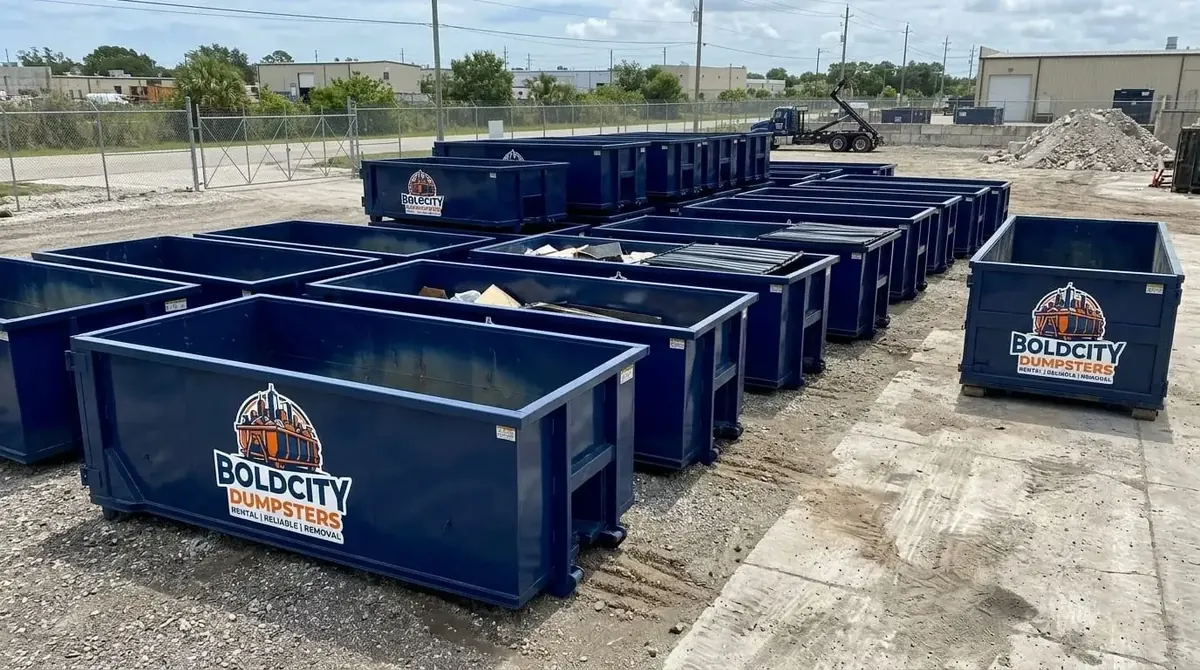
For most home projects in Jacksonville, the 20 yard dumpster is the place to start. It is our most popular size and the closest thing to an all-purpose box: whole-home cleanouts, multi-room renovations, roofing jobs, landscaping and light demolition. Go 10 yard for small kitchen or bathroom remodels, roofing debris, concrete, brick and dirt, or a garage or attic cleanout where driveway space is tight. Go 15 yard for garage cleanouts, yard waste, flooring and carpet removal, kitchen and bath remodels and small deck or fence removal. Go 30 yard for estate cleanouts, large renovations and demolition debris, and 40 yard for commercial construction, major cleanups and large demolition jobs. Not sure? Call (904) 595-8110 and we size it for you.
Two rules of thumb from the jobs we see. Heavy material — concrete, dirt, brick, asphalt, gravel and roofing shingles — is typically restricted to a 10 or 15 yard because of transportation weight limits. For a roof, our 10 and 20 yard boxes are the usual picks; tell us the approximate size of the roof and we will recommend one. When a project sits on the line between two sizes, remember the trade: too small can mean an extra pickup, too big means paying for space you never fill — and for heavy material, smaller is the safe side.
All five are open-top roll-offs about 7.5 feet wide. The 10 and 15 are shorter boxes; the 20, 30 and 40 share a footprint of about 22 feet and simply get taller. Pickup loads and trash bags are a rough guide to volume. The weight column is the allowance many rentals include, which depends on the debris type and the rental terms.
| Size | Approx. L × W × H | Holds about | Typical weight allowance | Typical job |
|---|---|---|---|---|
| 10 yard | 14' × 7.5' × 3.5' | 3 pickup loads (50–70 bags) | 1–2 tons | Small remodels, roofing debris, concrete, dirt |
| 15 yard | 16' × 7.5' × 4.5' | 4–5 pickup loads (80–100 bags) | 2–3 tons | Garage cleanouts, yard waste, flooring removal |
| 20 yard | 22' × 7.5' × 4.5' | 6 pickup loads (110–130 bags) | 3–4 tons | Home remodeling, roofing, larger cleanouts |
| 30 yard | 22' × 7.5' × 6' | 9 pickup loads (170–190 bags) | 4–5 tons | Estate cleanouts, renovations, demolition debris |
| 40 yard | 22' × 7.5' × 8' | 12 pickup loads (230–250 bags) | 5–6 tons | Commercial construction, major cleanups, large demolition |
Most people under-count the pile. Walk the house or the job before you call — count rooms, pickup loads or the square footage of flooring or roofing coming up — and tell us what the material is. Estimating the debris is most of the decision, and we help customers choose the right size every day.
Volume and weight are two separate limits. Furniture and household junk are bulky and light; concrete, dirt, brick, asphalt, gravel and shingles hit the weight line long before the box looks full. Each rental includes a standard weight allowance for its size and debris type. If materials go over it, additional disposal fees may apply based on landfill weight charges, and heavy debris may need special pricing or a separate container. Tell us what is going in and we will match the size to the weight. One local rule to know: in Atlantic Beach, City Code §16-8(d)(4) says no roll-off used for concrete or comparable heavy debris, soil included, may exceed 20 cubic yards.
There is a disposal reason to sort, too. Under Florida law, construction and demolition debris — steel, glass, brick, concrete, asphalt roofing material, pipe, drywall and lumber from building, renovating or tearing down — is its own class of waste, and F.S. 403.703(6) says "Mixing of construction and demolition debris with other types of solid waste will cause the resulting mixture to be classified as other than construction and demolition debris." A C&D facility may take only C&D debris (Rule 62-701.730(4)(a)). So a clean remodel load and a household cleanout load are two different loads at the gate. And mind the height: debris must stay level with the top rim. An overfilled dumpster cannot legally or safely be transported, and additional charges may apply if material has to be removed before pickup.
Check the length first: about 14 feet for a 10 yard, about 16 for a 15, and about 22 feet for the 20, 30 and 40. All are about 7.5 feet wide. Pick a clear, flat, stable spot with room for the truck to back in safely, look up for low wires and tree branches, and move cars, trailers and equipment out of the way before the driver arrives. If you will not be there, mark the spot. Protective boards can often be used under the wheels on request, and many customers put plywood or boards down for extra surface protection. The 10 yard is the one for a tight driveway.
Keep it on private property where you can. We found no City of Jacksonville permit rule for a roll-off on your own driveway. A City street, sidewalk or right-of-way is different: Ordinance Code §744.110 requires a right-of-way permit from the Director of Public Works. On a state road there is no permit path at all — FDOT Rule 14-20.008 caps waste receptacles on state right-of-way at 110 gallons and four feet tall. Fernandina Beach regulates even private land: its Land Development Code §5.02.06 treats a roll-off as a temporary structure that needs a temporary use permit and must sit at least one foot from any property line. The permit guide covers every place we serve.
The City of Jacksonville takes building materials from a homeowner's own project, but only a little: up to 1 cubic yard weekly in non-automated areas and up to 2 cubic yards every other week in automated areas (Ordinance Code §380.207). The City's FAQ says that if you will be generating more, "you will need to hire a rubbish removal company to provide a construction debris container," and "Any debris from work performed by a contractor must be removed by the contractor." The City is not responsible for tree waste generated by a tree surgeon or similar commercial entity either (§380.206).
The Beaches and the counties around us work the same way. Neptune Beach (§11-118(a)), Jacksonville Beach (§27-26) and Baldwin (§9-10) all make the owner or contractor remove contractor's debris, and Fernandina Beach says construction waste over two cubic yards must be removed by the owner or the person doing the work (§66-5). Nassau County's Convenience Recycling Center takes residential waste from county residents only and does not accept yard waste or residential construction and demolition debris. In Clay County, all waste generated by businesses must go to the Rosemary Hill Solid Waste Management Facility. A roll-off is for the pile that is bigger, heavier or sooner than any of that allows.
Describe the job on the phone — the materials, the scope and the timeline — and we recommend the size that fits. If the project grows, we can often coordinate a swap-out quickly.
Talk to a real person
Call (904) 595-8110 with the address and what is going in. A flat price and a delivery window before you hang up.
Open 24 hours, 7 days
From this guide
A 10 yard handles a small kitchen or bathroom remodel, and a 15 is a common pick for kitchen and bath work with cabinets, tile and countertops. Once the work spreads to several rooms, a 20 is the usual call, and large renovations can need a 30.
Our 10 and 20 yard dumpsters are the ones most often used for roofing — shingles, underlayment and flashing. Shingles are heavy, so the weight usually decides it. Tell us the approximate size of the roof and we will recommend the box.
A 10 or 15 yard handles a typical garage or attic cleanout. Our 15 and 20 yard boxes are often the fit for landscaping, tree trimming, brush and storm cleanup. A whole-home cleanout is usually a 20 or a 30.
Usually. It is about 22 feet long and 7.5 feet wide, so plan on that length plus room for the truck to back in. We found no City of Jacksonville permit rule for a roll-off on your own driveway, but check your HOA.
Keep reading
The rest of the series, same approach — official sources, no filler.
Permits
No City rule found for a driveway roll-off; a Jacksonville right-of-way permit for City streets; no FDOT path on state roads. Place by place.
Read the guideCost
In many cases, Jacksonville dumpster rentals run about $350 to $750. What is inside that number, what moves it, and the published landfill and permit fees.
Read the guideGuide
Everything in one place: how a roll-off rental works in Jacksonville, sizes and weights, what the City collects, permits, storm season and where loads go.
Read the guide